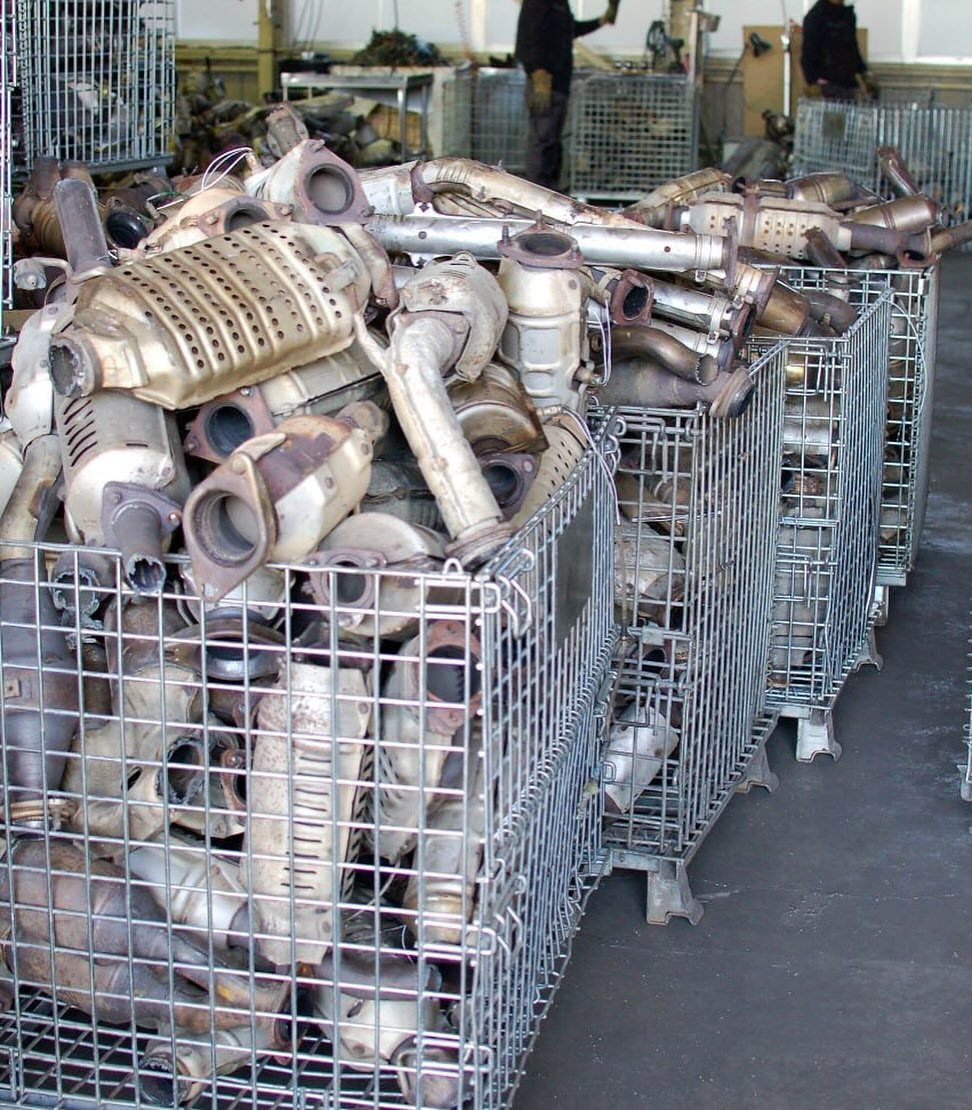
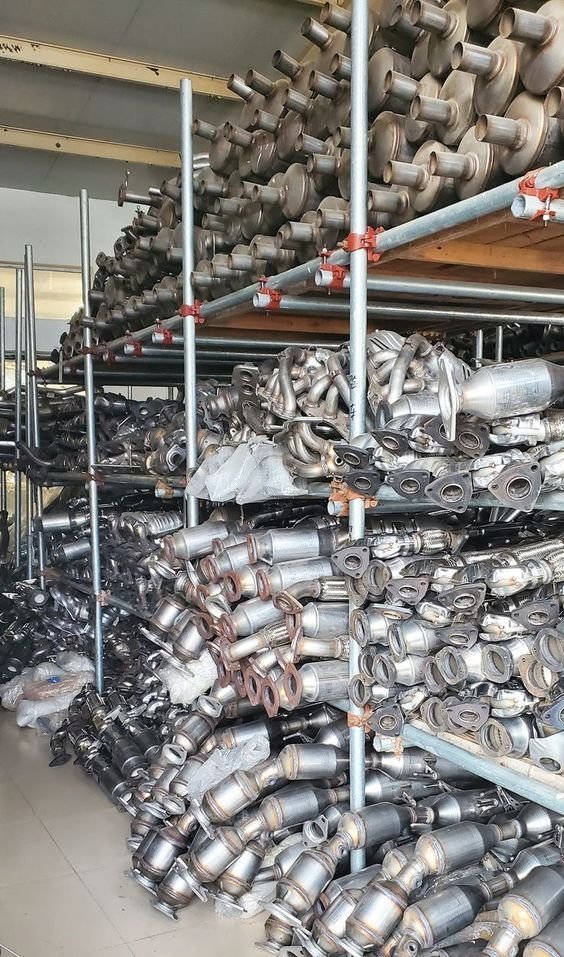
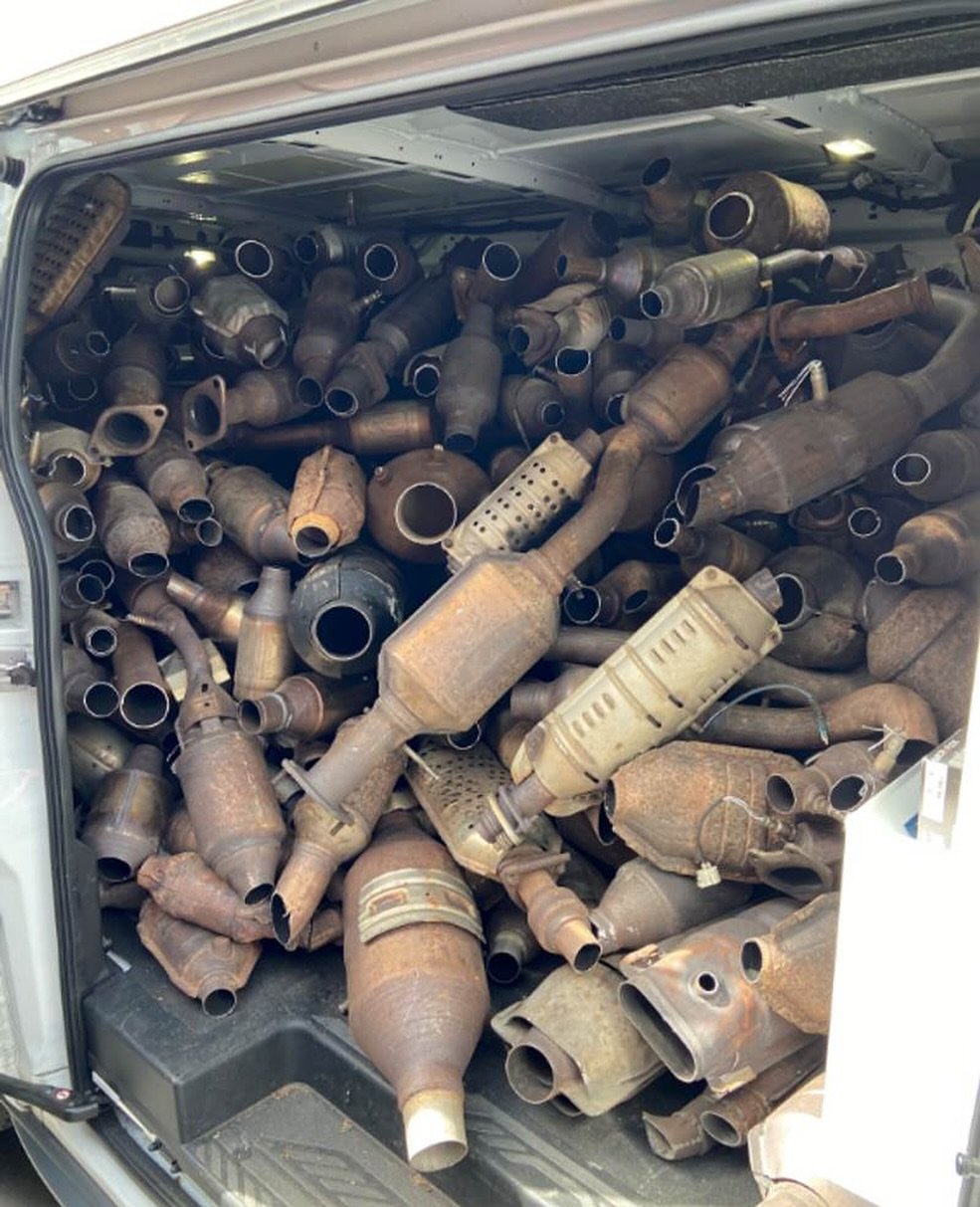
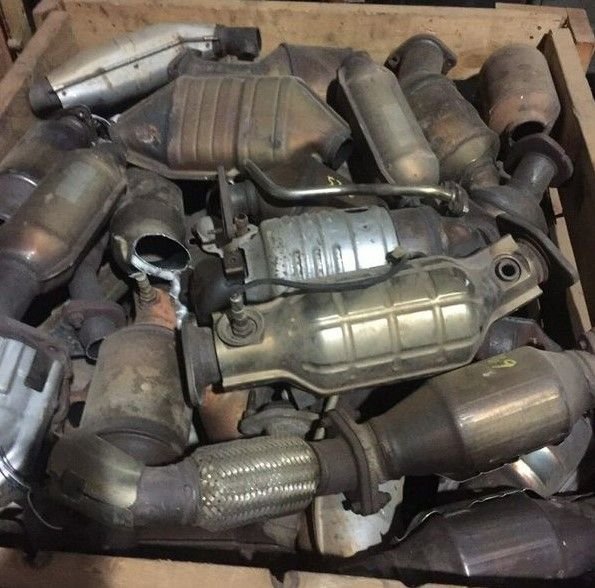
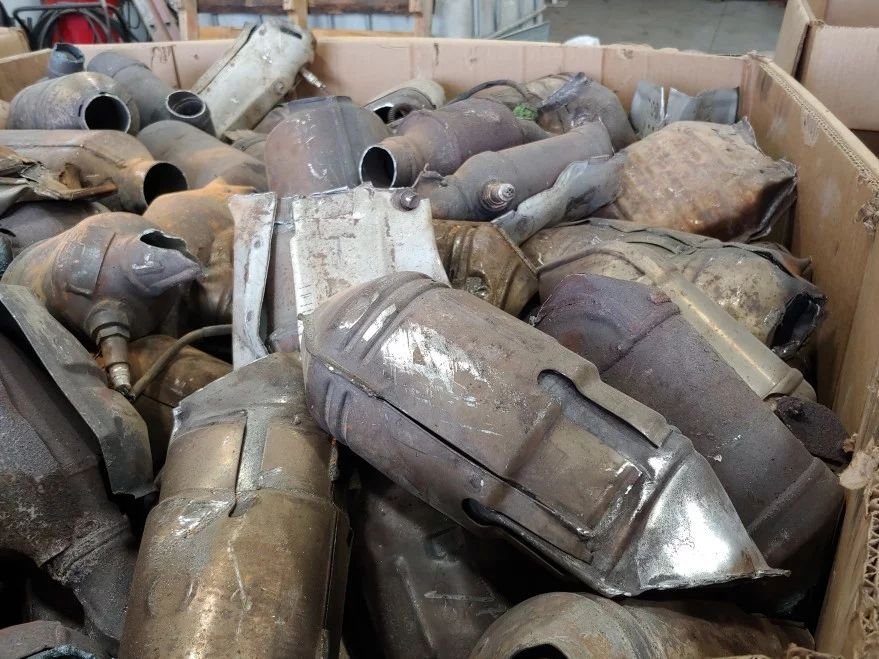
Whole and crushed converters sorted for platinum, palladium, and rhodium recovery. OEM units separated from aftermarket, graded by code and monolith assay, counted and weighed per piece.
Pricing per grade code (whole) or assay (crushed monolith).
Corporate Pricing Available Upon Request
| Material | Catalytic converters — whole units & crushed ceramic monolith |
| Sorting | OEM vs aftermarket separated · DPFs sorted as distinct stream |
| Grade Tiers | High: large truck/SUV OEM · Mid: passenger OEM · Low: small-car & aftermarket |
| PGM Content | Indicative 1–15 g combined Pt/Pd/Rh per whole unit by tier; monolith assay per lot |
| Condition | Whole units intact for code grading · crushed lots homogenized & sampled |
| Exclusions | No melted-through or empty shells beyond declared tolerance; no loose pipe scrap |
| Counting & Weighing | Piece-counted and weighed per unit; serial log for high-grade lots |
| Handling | Dust-controlled decanning; non-hazardous classification with full documentation |
High grade from 500 kg · mixed-grade container lots on request
Counted boxes / gaylords on pallets, shrink-wrapped, tamper-evident seals.
5–50 MT per month across whole and crushed streams.
Laem Chabang · FOB / CIF · video-recorded stuffing on request.
Whole OEM units can be graded by serial/code against published PGM databases — the most transparent pricing method in the trade. Crushed monolith sells on homogenized assay, which suits refiners with their own sampling labs.
Visually by shell stamping and monolith washcoat, then verified with XRF sampling. Aftermarket units (often minimal PGM) are priced in their own low tier, so you never pay OEM money for empty metal.
Yes — diesel particulate filters are sorted as a distinct stream with their own pricing, since their PGM loading differs from three-way gasoline catalysts.